Jan 31, 2012

It is not the number of years; it is the number of feet

There is a saying in computer programming, "It is not the number of years; it is the number of hours." I propose a revision for climbing training, "It is not the number of years; it is the number of feet."

If you want to get better, you have to climb feet (lots). If you want better power endurance, you need feet of climbing while being pumped silly. If you want to climb strong on the steep, you need climb feet of steep. If you want to climb V10, you better be able to crush feet of V9.

Every time you sit down, your climbing total is not going up. Every time you climb 10 moves of V3 and fall on the V5 move, you are getting better at climbing V3. The V5 total is the same.

Simple, ain't the same as easy.

Jan 28, 2012

Saturday Syke


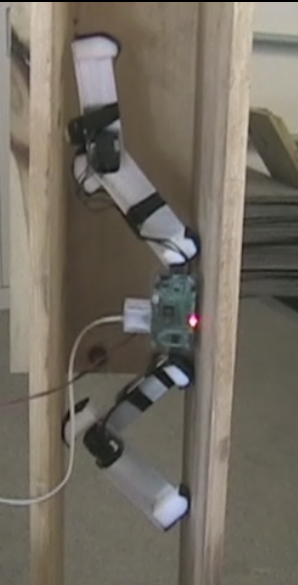
Imagine how this will transform climbing gyms, from custom holds to custom walls.

Jan 26, 2012

Columns & Rows

This is a follow up to the Pyramids, Diamonds, and Hourglasses post.

There are two additional shapes to structure training - Columns & Rows.

Columns
Columns are tall and skinny. The example above shows completing 1 boulder problem at every grade from V0-V10. Although this plan is simple, it is a dubious method to accomplish training goals. Rarely does the action of completing a column match any goal, other than to complete the column itself. Inherently, the intensity will either be too low or too high.

Rows
Rows are short and fat. The above example shows completing 8 problems at V5. It is easier to modulate volume and intensity in row format than column format, increasing the likelihood of eliciting a positive training effect. Continuous Intensity Repetitions (CIR) training is built upon the row idea.

Jan 24, 2012

Slide & Wedge, aka Crack Climbing 101


As a result of a recent crack climbing binge, I had this mini-epiphany:
All crack climbing is just "Slide & Wedge."

Your hands slide and wedge. Your feet slide and wedge. Your body slides and wedges.

Most crack climbing trouble is a failure to slide or wedge. Identifying and treating that single biggest weakness has the potential to up anyone's splitter game.

Sprinkle in high pain tolerance, you are ready for the 'Creek.

Jan 19, 2012

Pyramids, Diamonds, and Hourglasses

A plan doesn't have to be complicated to work. Let's look at the simplest plans for climbing performance and training:

Pyramids
Pyraminds are the most common plan and a great place to start. Build a base layer, 4 V7s in the example above. Then add another layer, 3 V8s in the example above. Keeping building up to the peak, V10 in the example above.

Pyraminds can be a good performance or training plan.

Intensity Zenith = 10
Intensity Nadir = 7
Intensity Total =80
Volume Total = 10
Intensity Average = 8*

Diamonds
Diamonds are the second most common plan. Start at the top, for example 1 V10. Then go down a level, for example 2 V9s. Continue one level at a time to the bottom. That last send feels very hard.

Diamonds work better for training than performance.

Intensity Zenith = 10
Intensity Nadir = 7
Intensity Total = 132
Volume Total = 16
Intensity Average = 8.25*

Hourglasses
I saved my personal favorite for last. Start at top (e.g., 4 V7s). Work down one level at a time (e.g., 3 V8s, 2 V9s, and 1 V10). At the bottom of the hourglass, the climbs are objectively easier but have the same subjective difficulty. It creates a beautiful grind. Hourglasses are designed to provide the appropriate volume at the appropriate intensity for maximal training effect.

Hourglasses work for performance and training.

Intensity Zenith = 10
Intensity Nadir = 7
Intensity Total = 150
Volume Total = 19
Intensity Average = 7.89*

* The averages are meant to illustrate qualitative differences in the plans, not quantitative differences. In order to construct meaningful averages, data needs to interval scaled. Climbing unfortunately chooses difficulty measurements that might not be interval scaled.
Jan 17, 2012

Subtle Limiters

Improving limiters is the fastest path to improvement. In the case of climbing, limiters can be subtle. They are not always obvious like falling on a climb.

Are you barndooring but not coming off? That is a clue that your foot postion could be optimized.

Do you consistently hyperventilate after you clip the anchors? Your breathing might not match the nature of the climbing.

Are you holding to much tension during easy moves? Learning when to apply peak tension separates good from great climbers.

There is no end to this game. It keeps climbing at all levels engaging. A moment to recoganize the limiter but a lifetime to improve it.

Jan 12, 2012

The Complete Guide to Projecting

Do you project better climbs to get better or you get better to project better climbs?